In August, we walked through the 21st Century ROAD to Housing Act and what the new federal law could mean for Michigan families. One provision deserves a closer look this month as homeowners across the state head into heating season: the Whole-Home Repairs pilot. It speaks directly to one of Michigan’s most persistent housing challenges, and it still needs Congress to fund it.
Michigan’s Housing Stock Is Getting Older
Many of Michigan’s homes were built generations ago. According to U.S. Census Bureau data, the typical home in Wayne County was built in 1956. In Gogebic County in the western Upper Peninsula, it was 1954, and in Houghton County, 1959. Communities across the state have similar stories.
Older homes are often the most affordable homes in a community, and they are a big reason Michigan families can still find a starter home or stay in the neighborhood where they raised their kids. They also need roofs, furnaces, wiring, and plumbing replaced on a schedule that doesn’t always line up with a homeowner’s budget. Many of the people who own these homes are seniors living on fixed incomes, veterans, and working families who bought an older house because it was what they could afford.
What Happens When Repairs Wait
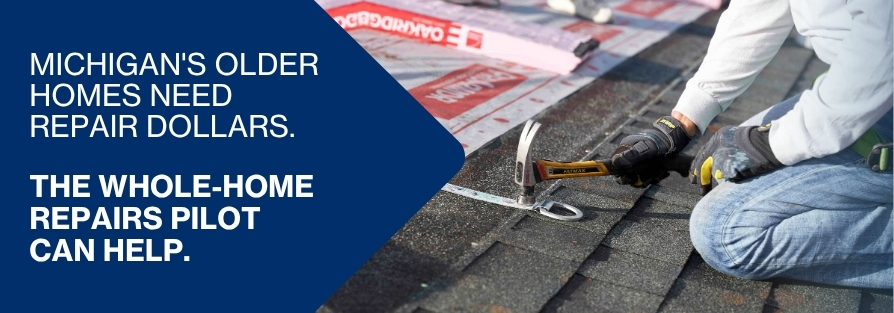
A small roof leak becomes water damage and mold. An aging furnace leads to space heaters and a higher risk of fire. Outdated wiring creates hazards a homeowner may not even know are there. Each delay adds cost, and eventually a home can become unsafe to live in. When that happens, a family loses its stability, and the community loses an affordable home it can’t easily replace.
Michigan is already short an estimated 150,000 to 200,000 housing units. Keeping existing homes safe and livable usually costs a fraction of what it takes to build new, which makes home repair one of the most practical tools available for protecting the affordable housing we already have.
What the Whole-Home Repairs Pilot Does
The Whole-Home Repairs Act was included in the ROAD to Housing Act signed into law in July. It creates a five-year federal pilot program that supports state, local, and tribal home repair programs. Through those programs, low- and moderate-income homeowners can receive grants, and qualifying small landlords can receive forgivable loans, for health and safety repairs, accessibility improvements, and critical maintenance.
For Michigan, that means more resources could flow to the kinds of programs that already know how to identify homeowners in need, scope the work, and get repairs done through trusted local contractors.
Authorized, but Not Yet Funded
Passing a law creates a program, but Congress decides how much money each program receives through the annual appropriations process. As of September, housing organizations across the country were still urging Congress to fund the programs created by the ROAD to Housing Act, including the Whole-Home Repairs pilot.
The 2027 federal fiscal year began on October 1, and those funding decisions are being made now. Without an appropriation, the pilot cannot begin making grants to homeowners.
Michigan Already Shows What Repair Funding Can Do
Habitat for Humanity of Michigan funds critical home repairs through the 43 local Habitat affiliates across the state, through our Priority Home Repair program and our Homes of the Brave program for veterans and military-connected families. So far in 2026, we have funded 60 critical repair projects, with 128 more in progress.
This month, we shared the story of Duane Cofield, an Army veteran who has lived in his home since 2008. A leaking roof, unsafe bathroom wiring, and old, inefficient appliances were addressed through a single project, and he now heads into winter with a dry roof and lower energy bills.
Projects like Duane’s show how much a well-run repair program can accomplish. They also show the limits of current funding. Federal investment through the Whole-Home Repairs pilot could help Michigan reach more homeowners before small problems become emergencies.
Make Your Voice Heard
Your members of Congress need to hear that home repair funding matters to their constituents. Reach out to your Congress member asking them to fund the ROAD to Housing Act programs, including the Whole-Home Repairs pilot.